
How the USD Discovery District is building a favorable environment for innovation
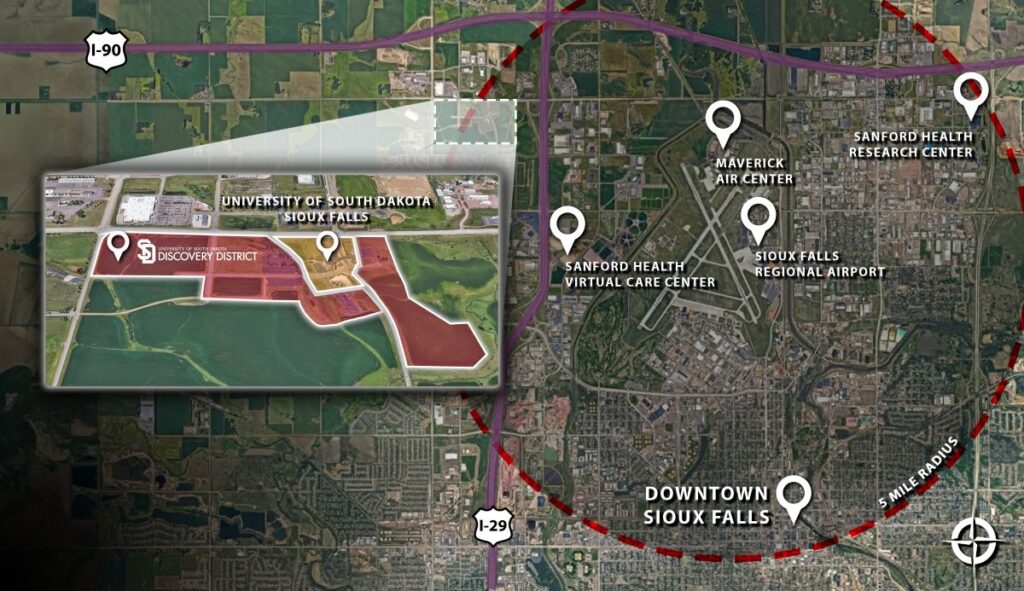
Something is taking shape on the north side of Sioux Falls, though you might not notice it right away.
The street names are a good place to start.
Nobel Street runs through the District, named for Ernest Orlando Lawrence, a USD graduate from Canton, South Dakota, who went on to win the Nobel Prize in Physics for inventing the cyclotron. His brother, John Lawrence, also a USD graduate, is considered the father of nuclear medicine. Their work helped move science out of theory and into treatment.
A block over, Frances Avenue references Dr. Frances Kelsey, a South Dakota native and physician who, as an FDA pharmacologist, refused to approve thalidomide in the United States—preventing widespread birth defects and reshaping modern drug safety standards.
And Ochsner points to Dr. Alton Ochsner, another USD graduate, a physician and researcher who was among the first to identify the link between smoking and lung cancer—work that would go on to shape public health for decades.
None of that feels accidental when you’re walking the area. It feels like a place that was thought about long before the first building opened.
That’s because it was.
Ernest O. Lawrence once wrote that scientific achievement “flourishes only in a favorable environment.”
It’s a simple idea. But it reframes what a place like this is meant to do.
More than three decades ago, leaders in business, education, and government began shaping the idea of a university-based research district in Sioux Falls. The goal was straightforward: create a place where research, student development, and private industry could exist close enough to actually work together.
For a long time, that idea lived mostly on paper.
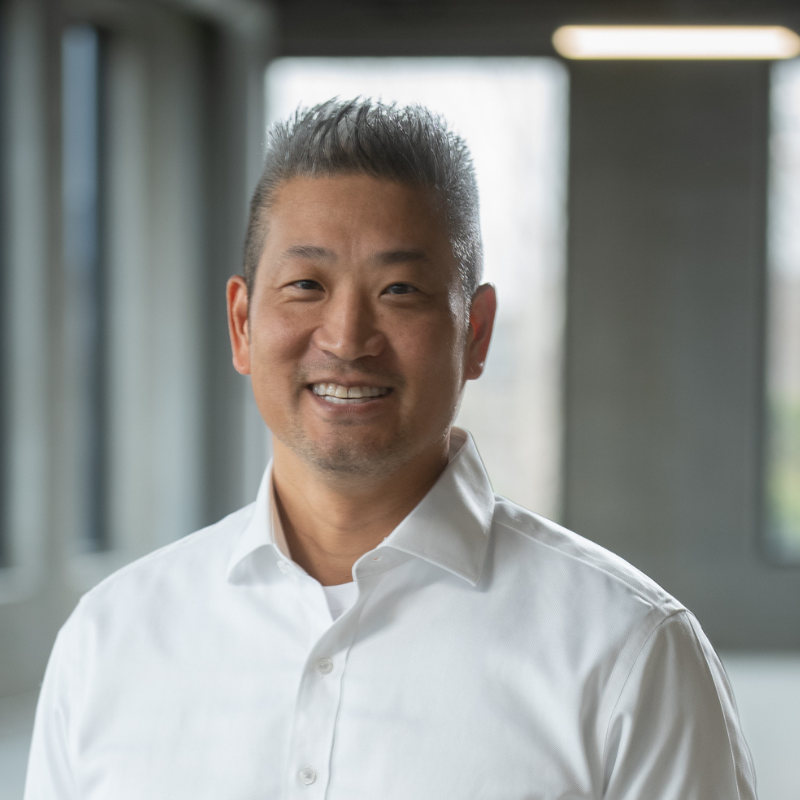
For Ryan Oines, that long arc—from idea to execution—is the work.
As President of the USD Discovery District, he sees the role less as building something new and more as creating the conditions for what was envisioned years ago to actually function.
“Our job is to make it easier for those connections to happen,” he said. “From classroom to company, from research to application.”
Not everyone believed it would work.
“There was a natural skepticism about whether we could accomplish the vision here,” said Jay Perry, Vice President for USD – Sioux Falls.
Now, parts of it are starting to show up in practice.
Where Movement Starts to Matter
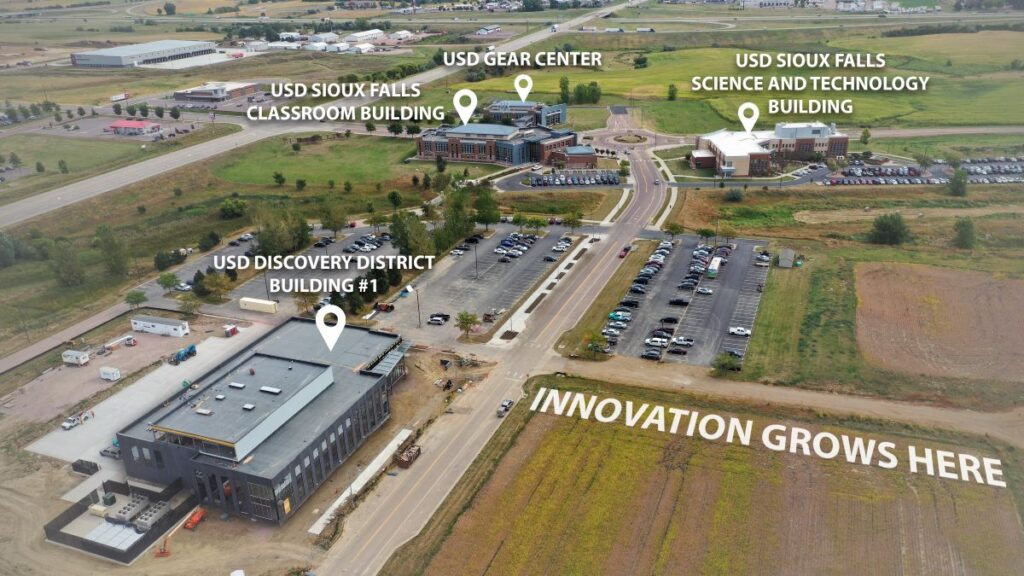
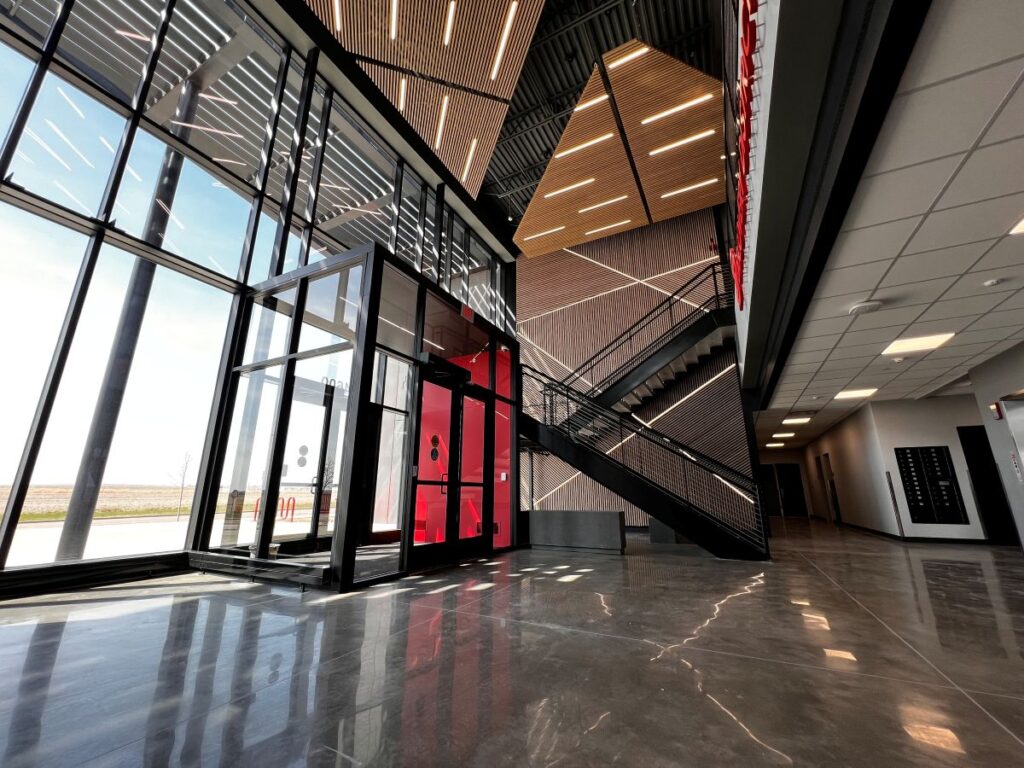
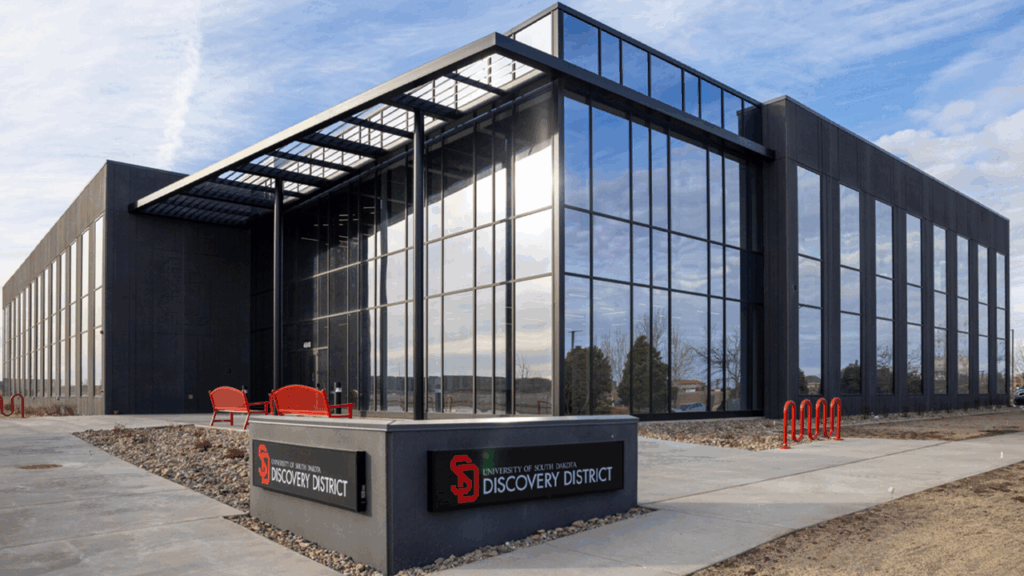
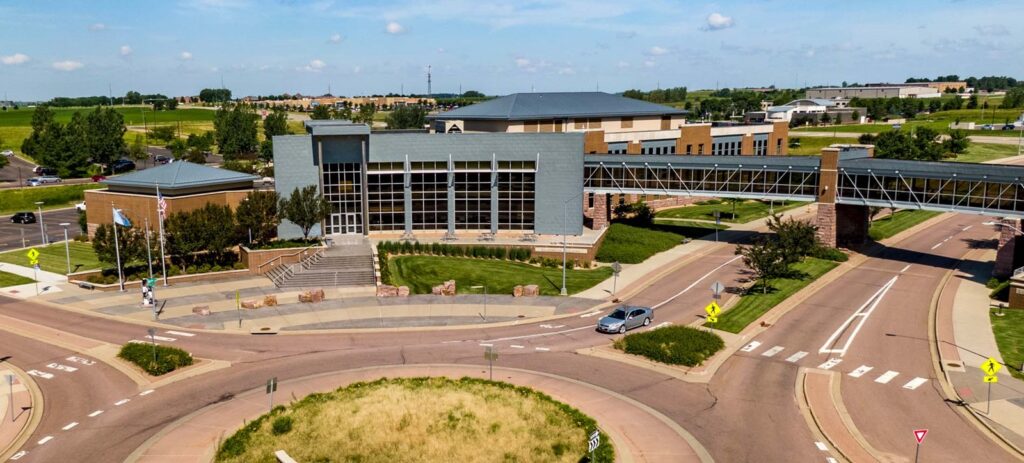
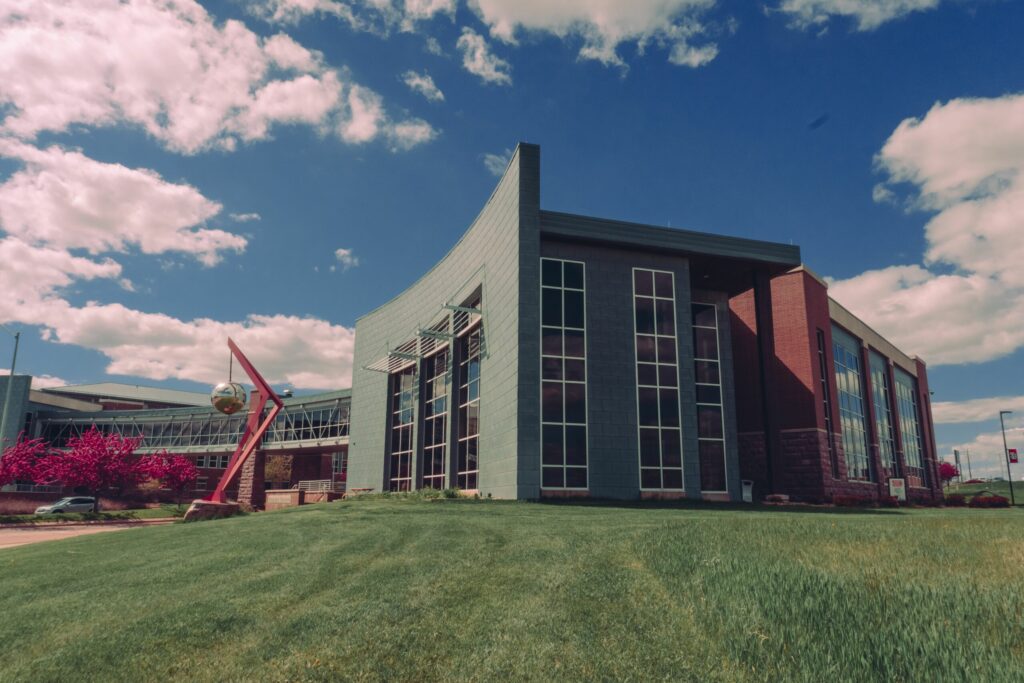
Just west of the University of South Dakota’s Sioux Falls campus, Building 1 at the USD Discovery District has been steadily filling with activity.
A student finishes class and walks across the street for an internship. A nonprofit hosts an open house and sees student veterans stop in out of proximity and curiosity. A conference room hosts a session on SBIR and STTR funding, where researchers, founders, and faculty sit together and work through how ideas actually get funded.
None of these moments feel like milestones on their own.
But taken together, they start to show what this place is meant to do.
“We’re starting to see the very first seeds of that,” Perry said. “Exchanges between the businesses at the Discovery District and what we’re doing here, utilizing each other’s resources.”
It’s still early. But the interaction is starting to feel real.
A Campus Growing Against the Grain
USD – Sioux Falls is expanding at a time when many universities across the Midwest are preparing for decline.
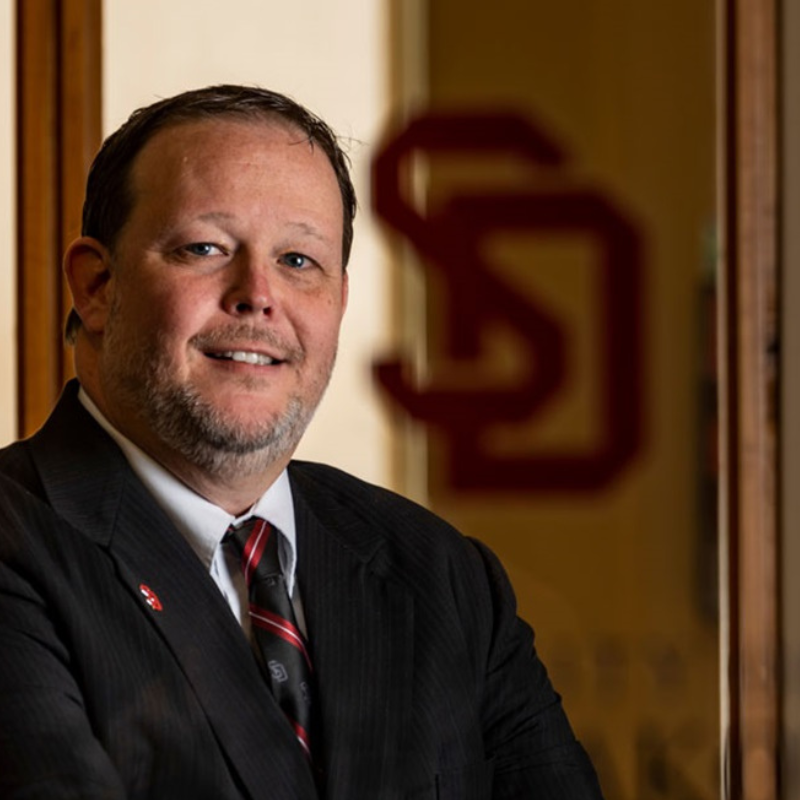
“In the Midwest, we’re expecting to see an 11 percent decline in high school graduates,” Perry said. “We’re not doing that in Sioux Falls. In Sioux Falls, we are growing.”
Over the past four years, that growth has been measurable.
“Our undergraduate enrollment has grown by 23 percent, and overall enrollment has grown 40 percent,” he said. “So we are capitalizing on it. But the work’s never done.”
The growth isn’t broad. It’s intentional.
“We are not trying to serve all of South Dakota,” Perry said. “We are trying to serve greater Sioux Falls.”
That focus shapes everything—program development, employer partnerships, and how students move into the workforce.
“From the day you step on campus, we’re not just thinking about how you’re going to get through college,” he said. “We are thinking about what you’re going to do after you leave.”
The Advantage of Being Early—and Local
If Perry’s view is grounded in what’s happening on campus, Dan Engebretson, USD Vice President for Research and Sponsored Programs, is looking at the system around it.
“We’re earlier,” he said. “We’re younger versions of those larger hubs.”
That comes with tradeoffs.
“A lot of it is just mass,” he said. “In order to have great ideas, you have to have lots of ideas–and we just don’t have as many people.”
Part of that work is already taking shape through the USD Graduate Education and Applied Research (GEAR) Center, where Engebretson is based. The space is designed to support applied research and early-stage development, giving faculty and students a place to move ideas beyond the classroom.
Some of that work is beginning to show up in the form of student- and faculty-led ventures, including early efforts like Dakota Motion Labs—projects that sit somewhere between research and company formation.
The proximity to the Discovery District matters here. It creates a path where work that starts inside the GEAR Center doesn’t stall out, but has somewhere to go next.
It also comes with a different way of seeing the same environment.
Engebretson tells a story about driving across South Dakota at sunrise.
He and his wife—both scientists—were talking about light scattering, the physics behind the colors in the sky.
Then it clicked.
The farmer sees that same sunrise and thinks about the day’s work. The artist sees something else entirely.
The phenomenon doesn’t change. The interpretation does.
“And it’s not that that conversation is any better,” he said. “It’s just different.”
For a long time, Sioux Falls hasn’t been widely seen as a place where research and innovation naturally converge.
But that perception is starting to shift—not because the underlying capabilities are new, but because they’re beginning to connect.
There’s also a level of shared excitement that’s hard to miss.
Perry talks about a “pulse” that wasn’t there before.
Engebretson sees the early signs of a system beginning to take shape.
Oines focuses on making those connections easier to repeat.
They’re describing the same thing, just from different vantage points.
From Proximity to Participation
Proximity alone doesn’t create an ecosystem. It creates the possibility of one.
What happens next depends on whether people actually move between those spaces.
At the Discovery District, that movement is becoming more visible.
Event programming has started to play a quiet but important role. Sessions like the upcoming SBIR/STTR workshop bring researchers, founders, and university partners into the same room to work through real funding pathways. Open houses and community events create opportunities for people to step into spaces they might not otherwise enter.
At a recent event for Community Action for Veterans, student veterans walked over from nearby buildings to see the new tenant space. Conversations started. Connections formed.
There wasn’t anything overly formal about it, and that’s part of what made it work.
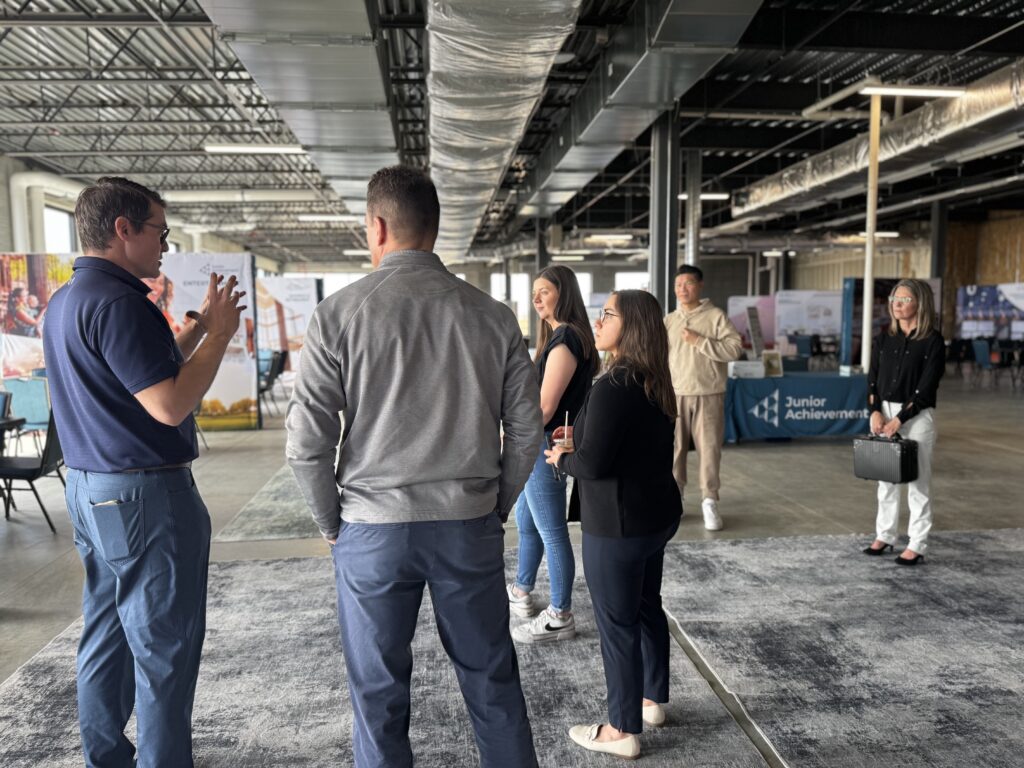
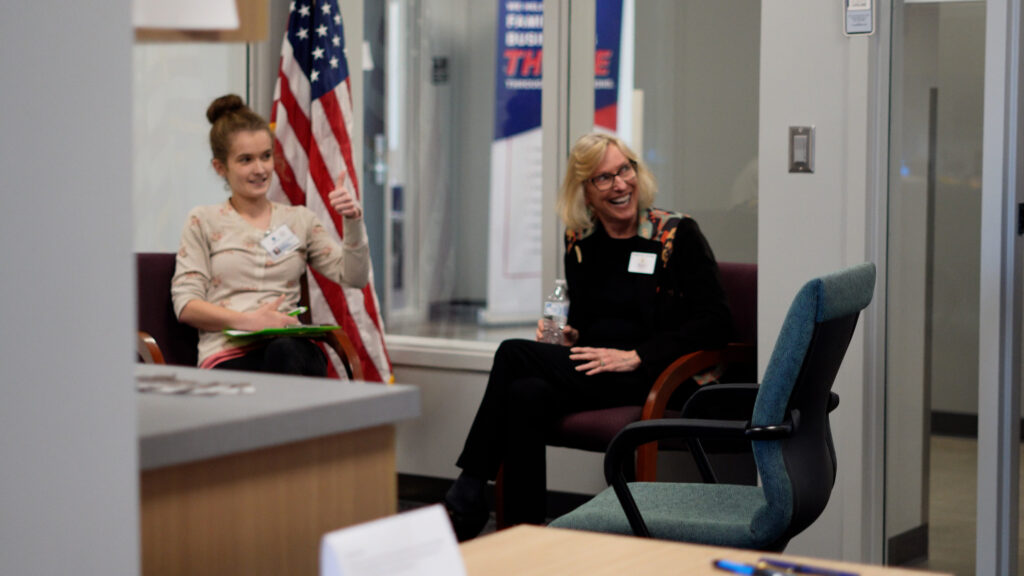
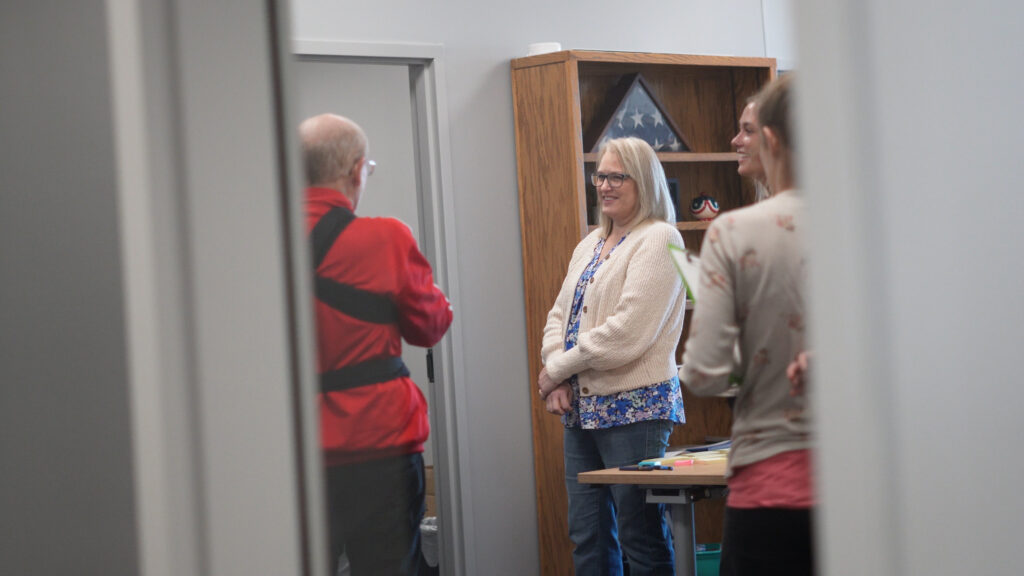
“These are the kinds of interactions we’re trying to create more of,” said Oines. “Not big, one-time moments, but repeatable ones where people start to cross paths more naturally.”
For Oines, the focus isn’t just on filling space. He spends most of his time thinking about how to reduce friction between those groups.
Why This Environment Works for Certain Companies
Not every company is a fit for a place like Sioux Falls. And that’s part of the point.
The companies that tend to thrive here are the ones that are willing to engage with the community around them—whether that’s through workforce development, research partnerships, or simply being present.
Perry sees that as a defining characteristic.
“The companies that succeed here tend to be the ones that commit to the community,” he said. “They’re not just locating here. They’re participating.”
You can already see that in how some of the early tenants operate.
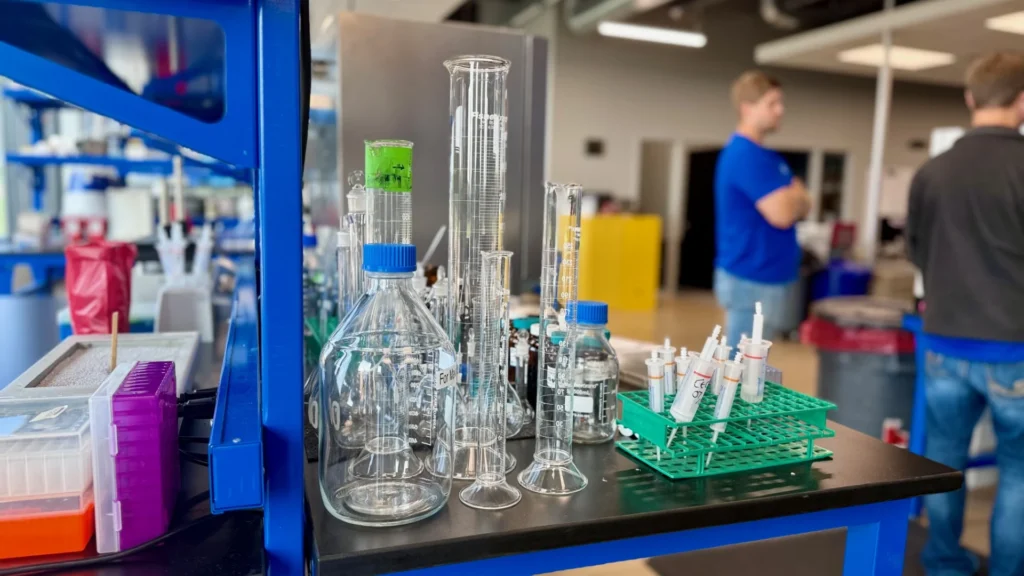
OmegaQuant, a Sioux Falls-based diagnostic testing company, has built a global reputation in fatty acid analysis while remaining closely connected to local research and talent pipelines. Their presence reflects a model where companies don’t have to choose between global relevance and regional roots.
For companies in bioscience, life sciences, and health innovation, that combination can be difficult to find.
That’s the environment the Discovery District is working to make visible, and easier to access.
A Different Kind of Competitive Advantage
South Dakota doesn’t compete on the same terms as larger markets. It doesn’t need to.
What it offers is something different.
Time. Focus. Lower friction. The ability to move without as many layers between idea and execution.
At a practical level, that shows up in ways that matter to founders and operators:
- Closer access to university leadership and research teams
- More direct pathways to clinical and community partners
- Operating environments where decisions can move faster
- A cost structure that allows ideas more time to develop
It also shows up culturally.
People answer calls. Meetings happen quickly. Introductions tend to lead somewhere.
With fewer layers between people and shorter distances between institutions, you can see it in how programs are built, how quickly partnerships form, and how often people cross paths compared to a year ago.
What Comes Next
No one involved in building the Discovery District thinks it’s finished.
“We’re still early,” Perry said. “There’s a lot left to build.”
But the tone has shifted.
“When you look at what USD – Sioux Falls has done over the past four years and the momentum that’s building, there’s a pulse here now that wasn’t here before,” Perry said.
His vision for the next phase is practical.
More students. More companies. More interaction between the two.
He talks about a campus where guest lecturers can walk over instead of getting on a plane. Where students finish class, cross the street, and step into a lab or an office in the Discovery District.
Where that movement—between classroom, research, and work—becomes part of the day, not something separate from it.
Even the markers of success are grounded.
“If we get to a point where people are complaining about parking,” Engebretson said, “that probably means we’re doing something right.”
The week this article came together, researchers, students, and faculty were gathering in Vermillion for USD Research Week—presenting work, sharing ideas, and, in some cases, just beginning something that will take years to fully develop.
That rhythm is starting to take shape in Sioux Falls, too.
It’s still early.
But something is starting to hold.